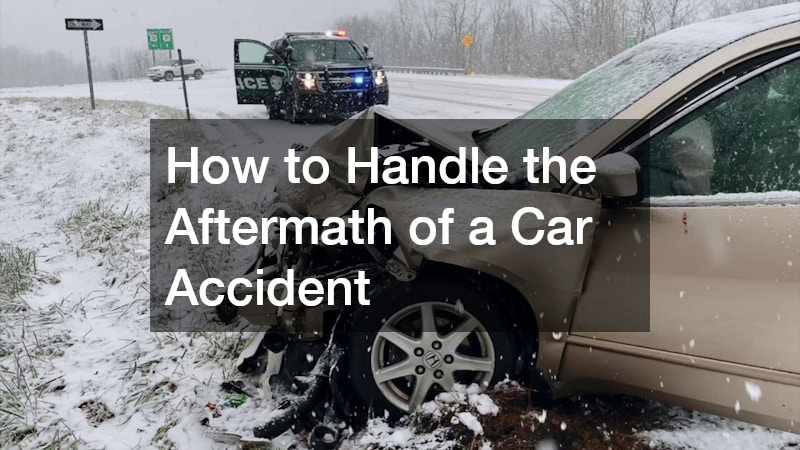
The moments immediately following a car accident are a blur of noise, shock, and confusion. Your heart races and adrenaline surges through your body, temporarily masking physical pain. In the chaos of the scene, it is easy to make simple mistakes that can jeopardize your physical health, your legal rights, and your financial recovery weeks down the line.
Immediate Safety and Legal Protection

The very first phase of handling an accident aftermath centers entirely on securing the scene and establishing a solid foundation for any future claims. Before worrying about the state of your vehicle, you must minimize the risk of a secondary collision, which frequently happens when damaged cars are left exposed in active traffic lanes.
Securing the Scene
-
If your vehicle is still drivable, carefully move it to the shoulder or a nearby parking lot. If it cannot be moved, turn on your hazard lights immediately, set up emergency flares, and move to a safe area away from the roadway.
-
Check everyone involved in the collision for visible injuries. Do not attempt to move anyone who complains of severe neck or back pain unless staying in the vehicle poses an immediate, life-threatening danger.
Establishing Official Documentation
Once safety is established, your next priority is to involve local law enforcement. Even if the other driver insists that the damage is minor, you should always insist on a formal police report. A private agreement at the scene is completely non-binding, and drivers often change their stories later. When the police arrive, state the facts clearly and objectively without speculating about who caused the crash. The resulting official accident report will serve as an unbiased, foundational piece of evidence that insurance companies rely upon heavily to determine fault.
While waiting for law enforcement, use your smartphone to capture as much photographic evidence as possible. Take wide shots of the entire scene showing the positioning of all vehicles, traffic signs, lane markings, and skid marks on the pavement. Zoom in to capture the specific damage to all vehicles involved. If there are any witnesses nearby, politely ask for their names and contact numbers, as their independent statements can prove invaluable.
Navigating Conversations and Fault
When interacting with the other driver and insurance representatives at the scene, it is vital to watch your wording carefully. Expressing natural politeness by saying phrases like “I’m so sorry” can be legally interpreted by insurance adjusters as an admission of fault or liability. Keep your conversations focused strictly on exchanging contact information, driver’s license numbers, and insurance policy details.
If the accident resulted in significant property damage or injuries, or if the other driver’s insurer begins disputing the facts of the case, you may find that managing the bureaucracy on your own is incredibly overwhelming. In these adversarial scenarios, consulting with car accident lawyers early in the process ensures that your rights are aggressively protected, that insurance adjusters do not pressure you into a lowball settlement, and that all critical evidence from the scene is legally preserved.
Addressing Hidden Physical Injuries
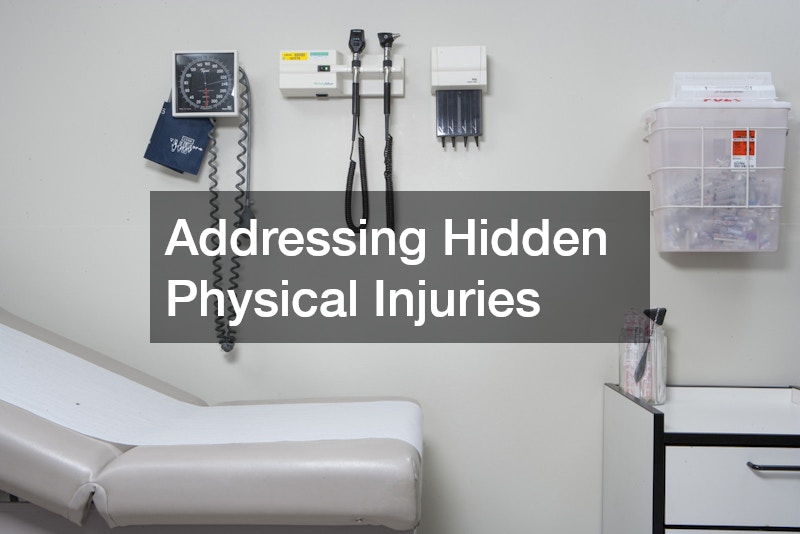
Once the immediate shock of the crash begins to fade and you return home, your biological systems will slowly return to normal. As the adrenaline wears off, many individuals suddenly begin to notice aches, stiffness, and pains that were completely imperceptible at the crash scene.
The Delayed Onset of Trauma
It is a dangerous medical mistake to assume you are completely uninjured just because you walked away from the collision without any broken bones or bleeding wounds. Soft tissue injuries, particularly in the neck, shoulders, and lower back, are notorious for having a delayed onset. Whiplash, which occurs when the force of an impact violently snaps the head forward and backward, causes microscopic tears in muscles and ligaments that can take 24 to 48 hours to become inflamed enough to cause severe pain.
Seeking Specialized Medical Evaluations
-
Go to an urgent care clinic or emergency room immediately if you experience dizziness, headaches, blurred vision, or confusion, as these are common red flags for a concussion or traumatic brain injury.
-
Do not brush off a stiff neck or a dull ache in your lower back as standard post-accident soreness that will just go away with rest and over-the-counter pain medication.
While an emergency room doctor is excellent at ruling out life-threatening internal bleeding or fractures, they generally do not provide long-term rehabilitative care for structural trauma. To fully restore your range of motion and address underlying structural spinal misalignments caused by the sudden force of a collision, schedule a comprehensive assessment with a car accident chiropractor. These specialists can design targeted alignment and soft-tissue therapy programs that prevent chronic, long-term pain and scar tissue formation.
Protecting Your Medical Claim Timeline
Seeking medical attention quickly is just as important for your insurance claim as it is for your physical recovery. Most insurance companies operate under a strict internal guideline known as the 72-hour rule. If you wait more than three days after an accident to see a doctor or a specialist, the insurance company will argue that your injuries were either not severe or were caused by a completely separate event that occurred after the car accident. Getting evaluated right away ensures that all physical symptoms are directly, legally tied to the crash, making it much more difficult for an insurance adjuster to deny coverage for your necessary medical treatment.
Restoring Visibility and Outer Body Damage
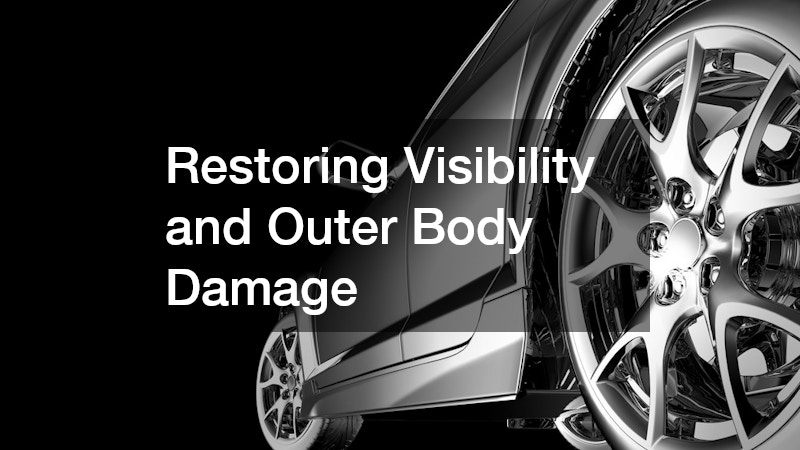
With your health and legal protections moving in the right direction, your attention must turn to addressing the physical and cosmetic damage inflicted upon your vehicle. Even a relatively low-speed impact can leave behind structural vulnerabilities that compromise the vehicle’s long-term utility and safety.
Prioritizing Glass Integrity
One of the most frequently overlooked areas after a collision is the vehicle’s glass. A minor crack or small chip along the edge of your front windshield might seem like a cosmetic nuisance you can easily put off fixing, but it poses a major safety hazard. The windshield is an integrated structural component of your car’s cabin; it provides up to half of the structural support required to prevent a roof collapse during a rollover accident and acts as a backstop for the proper deployment of passenger-side airbags.
A compromised piece of glass can fail entirely under pressure. Therefore, scheduling a timely windshield repair is essential to prevent a minor chip from rapidly expanding across your field of vision due to the natural vibrations of driving or sudden shifts in outdoor temperature.
Assessing Exterior Metal and Paint Damage
Beyond the glass, the metal panels of your vehicle are likely sporting a mix of deep dents, surface scratches, and crumpled edges. When a vehicle suffers a dent that has not fractured, cracked, or scraped the underlying paint layers, you do not automotive repair process that involves grinding off the paint, applying heavy chemical fillers, and completely repainting the entire panel.
For these specific types of minor impacts and shallow door dings, utilizing paintless dent removal is an exceptionally clean and efficient alternative. This technique uses highly specialized tools to gently and meticulously massage the metal back into its original factory shape from behind the panel. This process entirely preserves the durable, original factory paint finish, ensures an identical color match across the vehicle, and keeps the car’s overall resale value intact by avoiding a reported history of extensive body filler repairs.
Preventing Corrosion and Degradation
If the impact scratched or chipped the paint down to the raw metal layer, leaving it exposed to the elements is a recipe for rapid vehicle degradation. Moisture, road salt, and environmental debris will quickly cause rust to form on the exposed steel panels. Once rust takes root beneath the remaining paint layers, it spreads like a disease, bubbling up and structurally weakening the metal components. Addressing these outer damages quickly stops environmental corrosion before it can cause permanent structural harm to the vehicle’s exterior shell.
Diagnosing Under-the-Hood Mechanical Trauma
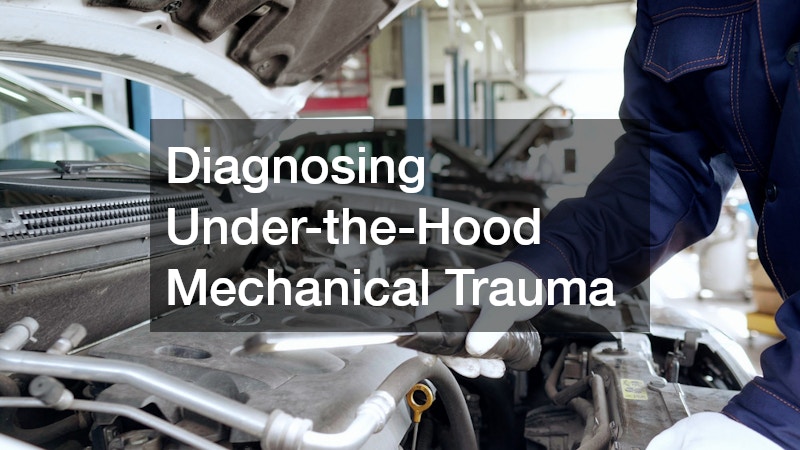
While outer body damage is highly visible, the most insidious and expensive consequences of a car accident often lie completely hidden beneath the hood and along the undercarriage of the vehicle. The violent forces of a crash can bend, crack, or dislodge internal mechanical systems that are not immediately obvious during a casual visual inspection.
Spotting Internal Leaks and Drivetrain Issues
After an accident, you should carefully monitor your garage floor or driveway for any signs of fresh fluid puddles, which could indicate a ruptured radiator, punctured oil pan, or damaged brake lines. Pay close attention to how your vehicle behaves when you shift gears or accelerate. If you notice a strange hesitation, heavy vibration, or a slipping sensation when the car attempts to accelerate, the impact may have shifted the alignment of the engine mounts or damaged the sensitive internal components of the drivetrain. Catching these warning signs early can prevent you from driving a vehicle that requires extensive transmission repairs, saving you from a catastrophic mechanical failure while traveling at highway speeds.
Identifying Exhaust and Emissions Failures
The kinetic energy of a rear-end or side-impact collision can travel easily through the length of your vehicle’s frame, putting tremendous stress on the rigid piping of the emissions system. Even if your car feels like it is running smoothly, a hard jolt can crack the exhaust manifold, loosen the catalytic converter, or break the welds holding the pipes together beneath the cabin.
A damaged emissions system is a severe safety hazard; small cracks can allow toxic carbon monoxide gas to seep directly into the passenger cabin, putting you and your passengers at risk of poisoning. Arranging for a professional auto exhaust repair is critical to ensure that all dangerous exhaust fumes are safely routed out the back of the vehicle and away from the interior airspace.
Verifying Undercarriage and Alignment Integrity
-
Look for uneven tire wear or a steering wheel that pulls aggressively to one side while driving on a straight, flat road.
-
Listen closely for loud clunking, squeaking, or groaning noises whenever you drive over speed bumps or steer through tight corners.
The wheels and tires take the brunt of lateral forces in a collision, and it takes very little impact to bend a delicate tie rod, crack a control arm, or damage a strut assembly. If your vehicle feels loose, unstable, or difficult to control after an accident, you must prioritize a comprehensive suspension repair. Driving with damaged suspension components distorts your vehicle’s handling characteristics, drastically increases your stopping distances, and subjects your tires to extreme, premature wear. Before you hit the road again, take the car to a trusted local garage for a complete car service check to ensure every single critical system is functionally sound.
Handling a Totaled Vehicle and Responsible Disposal
In severe accidents, the cost of repairing the comprehensive mechanical, structural, and cosmetic damages can easily exceed the actual financial worth of the vehicle itself. When an insurance adjuster calculates that the total repair bill surpasses a specific percentage of the car’s pre-accident value—usually hovering between 70% and 80% depending on your state’s regulations—the vehicle is officially declared a total loss, or “totaled.”
Navigating the Total Loss Valuation
When your vehicle is declared a total loss, the insurance company is essentially buying the damaged car from you based on its actual cash value immediately before the accident occurred. It is a common misconception that you must blindly accept the very first payout figure the insurance company offers you. Insurance companies use automated databases to find comparable vehicles sold recently in your geographic area to calculate their offer, but these algorithms frequently overlook recent upgrades, brand-new tires, or the immaculate maintenance history of your specific car.
To negotiate a fairer settlement, gather your own independent market research. Look up local listings for the exact same make, model, trim level, and mileage of your vehicle, and compile your recent service receipts to demonstrate that your car was worth more than their baseline valuation.
Options for Disposing of an Unrepairable Asset
If you choose to retain ownership of the vehicle rather than surrendering it to the insurance company, or if you only carried liability insurance and are left stuck with a heavily damaged, un-driveable vehicle, you need to find a practical way to clear the vehicle from your property and recoup whatever residual value remains inside the metal and components.
For vehicles that still possess valuable, intact components beneath the crushed exterior panels—such as a working alternator, pristine interior seats, or intact electronics—working with professional auto salvage services is an excellent way to sell the remaining usable parts to specialized buyers who rebuild cars.
Committing to Eco-Friendly Recycling
-
Choose facilities that actively drain and safely process hazardous fluids like battery acid, old engine oil, and toxic refrigerants before crushing the metal frame.
-
Ensure the disposal company handles all the necessary DMV salvage title paperwork correctly so you are fully released from any future registration or liability fees.
If the vehicle is completely crushed, burnt, or so old that parting it out is completely unfeasible, you should shift your focus toward an environmentally responsible destruction process. Contacting a licensed junk car recycling service allows you to transform an unusable piece of dangerous metal waste into a clean source of raw industrial materials. These eco-friendly recycling services melt down the steel, aluminum, and copper from your vehicle’s chassis, keeping thousands of pounds of heavy metal scrap out of local landfills and reintroducing the materials back into the manufacturing supply chain.
Successfully navigating the aftermath of a car accident requires patience, diligence, and a clear understanding of the steps necessary to rebuild. An accident is an unfortunate disruption, but following a structured roadmap ensures you can move forward with confidence, safety, and complete peace of mind.